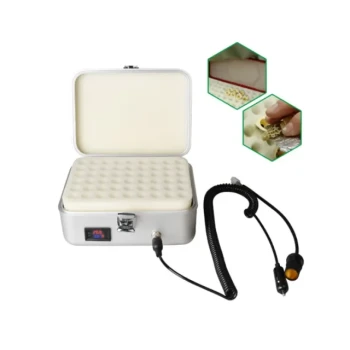
The primary function of a high-precision constant temperature and humidity incubator in this context is to artificially replicate the stable internal microclimate of a honeybee colony to allow for safe ex vivo (outside the organism/hive) storage. By maintaining strict environmental controls—specifically 32°C and 70% relative humidity—the device mitigates the severe physiological stress a queen experiences when removed from her natural habitat.
Core Takeaway The incubator acts as a life-support system that compensates for laboratory instability. Its critical value lies in preserving the histological integrity of the queen’s ovaries, ensuring that germ cell activity continues and cell death is minimized during isolation.
Simulating the Hive Microclimate
The fundamental challenge in storing honeybee queens outside a colony is that they are physiologically adapted to a highly regulated environment. The incubator bridges the gap between the chaotic ambient conditions of a laboratory and the homeostasis of a hive.
Precise Environmental Replication
To ensure survival, the incubator must maintain conditions distinct from standard room environments. The primary reference establishes that a temperature of 32°C and a relative humidity of 70% are the optimal parameters for ex vivo storage.
Compensating for External Fluctuations
Standard laboratory environments suffer from temperature drifts and humidity drops that can be fatal to queens. The high-precision nature of these incubators actively counteracts these external variables, providing the stability required for physiological maintenance.
Preserving Reproductive Potential
Beyond simple survival, the incubator serves a critical role in maintaining the queen's future utility as a reproductive engine. If the environment drifts, the queen may survive, but her fertility can be permanently compromised.
Maintaining Germ Cell Activity
The controlled environment is vital for sustaining the metabolic activity of the germ cells located within the queen's ovaries. Without the specific heat and humidity provided by the incubator, these cells may become dormant or damaged.
Ensuring Histological Integrity
Improper storage leads to cellular degradation. The incubator's regulation reduces the rate of cell death, preserving the structural (histological) health of the reproductive tissues so the queen remains viable for future introduction into a colony.
Understanding the Trade-offs
While high-precision incubators are essential tools, relying on them requires an understanding of their limitations and operational risks.
Biological vs. Environmental Support
The incubator provides only the physical conditions (heat and humidity) required for survival. It does not provide the social or nutritional support (trophallaxis and pheromone regulation) that a queen receives from attendant bees. Therefore, successful storage often requires combining the incubator with specific caging logistics that include attendant workers.
Specificity of Parameters
One common pitfall is assuming a "one size fits all" setting. While storage typically requires 32°C, active rearing or cultivation of larvae often requires higher parameters (up to 35°C and 90-95% humidity). Using rearing settings for storage, or vice versa, can induce stress rather than alleviate it.
Making the Right Choice for Your Goal
To maximize the effectiveness of a high-precision incubator, align your usage with your specific biological objectives.
- If your primary focus is Short-Term Storage: Set the incubator strictly to 32°C and 70% RH to minimize ovarian stress and maintain germ cell viability.
- If your primary focus is Larval Rearing: Recognize that you may need to adjust parameters upward (35°C / 90%+ RH) to support development rather than just maintenance.
- If your primary focus is Genetic Research: Use the incubator to eliminate environmental variables, ensuring that any observed changes in the queen are genetic rather than consequences of ambient stress.
Ultimately, the high-precision incubator serves as a physiological bridge, keeping the queen's reproductive biology suspended in a healthy state until she returns to a colony.
Summary Table:
| Feature | Optimal Storage Parameter | Biological Benefit |
|---|---|---|
| Temperature | 32°C | Maintains metabolic stability and prevents thermal stress. |
| Relative Humidity | 70% | Preserves histological integrity and prevents dehydration. |
| Control Precision | High Stability | Compensates for lab fluctuations to protect germ cell activity. |
| Storage Goal | Ex Vivo Maintenance | Suspends reproductive biology in a healthy state for later hive introduction. |
Maximize Your Queen Quality with HONESTBEE
For commercial apiaries and distributors, maintaining the reproductive potential of your stock is non-negotiable. HONESTBEE provides the professional-grade infrastructure you need to succeed. We offer a comprehensive wholesale range of beekeeping tools, specialized honey-filling machinery, and high-precision equipment designed to safeguard your investment.
From hive-making machines to essential consumables, our portfolio supports every facet of your operation. Partner with us to ensure your queens remain viable and your business remains productive.
Contact HONESTBEE today for specialized equipment solutions
References
- Bruno Berger, Carminda da Cruz‐Landim. Beekeeping practice: effects of Apis mellifera virgin queen management on ovary development. DOI: 10.1007/s13592-015-0404-8
This article is also based on technical information from HonestBee Knowledge Base .
Related Products
- Portable Queen Bee Incubator with 12V Car Adapter for Safe Transport
- Automatic Heat Preservation 6 Frame Pro Nuc Box for Honey Bee Queen Mating
- Queen Bee Artificial Insemination Instrument Equipment for Instrumental Insemination
- Plastic Beekeeping Honey Bee Larvae Grafting Tools for Queen Rearing and Chinese Grafting
- HONESTBEE Commercial Upright Honey Melter
People Also Ask
- What happens if a colony loses its queen during the nectar flow? A Guide to Salvaging Your Honey Harvest
- How can you tell if the worker bees have accepted the queen? Decode Bee Behavior for a Thriving Hive
- How can the queenless state of a newly created nuc be resolved? Expert Solutions for Colony Growth
- What are the primary reasons for replacing a queen bee? Boost Your Commercial Honeybee Colony's Success
- What queen bee behaviors should be observed after introduction? Ensure Hive Success with Our Expert Monitoring Guide