All Questions
In What Way Does Industrial-Grade Packaging And Processing Technology Impact Honey-Themed Cultural Merchandise? Boost Roi
Discover how industrial-grade packaging transforms honey into high-margin cultural merchandise, enhancing brand value and shelf life for B2B buyers.
How Do Industrial-Grade Honey Extraction And Filling Machines Influence Market Value? Boost Margins With Professionalism
Discover how industrial honey machines boost market value through hygiene, precision filling, and premium branding for B2B distributors.
What Is The Industrial Value Of Automated Honey Filling And Processing Equipment? Scale Your Commercial Honey Output
Discover how automated honey filling equipment drives scalability, ensures export-grade quality, and maximizes profits for commercial apiaries.
Why Is An Industrial High-Speed Centrifuge Necessary For Extracting Pollen Grains From Honey? The Key To Honey Analysis
Learn why high-speed centrifuges are vital for honey analysis, ensuring accurate pollen extraction to verify botanical origin and quality standards.
What Is The Function Of Constant Temperature Stirring Equipment In Eep Preparation? Boost Yield And Batch Consistency
Discover how constant temperature stirring equipment optimizes EEP yield, ensures batch consistency, and protects bioactive compounds for B2B supply.
How Does Specialized Honey Fermentation And Brewing Equipment Impact The Commercial Value Of Honey Products? Maximize Roi
Discover how specialized honey brewing equipment boosts commercial value through mead production, standardization, and enhanced shelf-life for retail.
What Are The Technical Requirements For Professional Stingless Bee Honey Harvesting And Storage Equipment?
Master stingless bee honey harvesting with vacuum extraction and acid-resistant storage. Essential technical standards for B2B distributors.
What Is The Mechanism And Purpose Of Using A Centrifuge In Honey Pretreatment For Tylosin? Ensure Testing Accuracy
Learn how centrifugation isolates Tylosin from honey matrices, ensuring accurate residue testing and sample purity for B2B honey supply chains.
Why Is Professional Honey Harvesting And Filling Equipment Essential For High-Yield Commercial Honey Production?
Discover how professional honey harvesting and filling machinery scales apiary output, ensures purity, and maximizes commercial profit margins.
What Physical Conditions Do Light-Shielded And Ventilated Maturation Rooms Provide For Bee Products? Ensure Peak Quality
Discover how controlled darkness and ventilation preserve bee product nutrients, prevent fermentation, and ensure long shelf-life for distributors.
Why Is The Upgrade To Automated Honey Filling And Processing Equipment Necessary? Secure Your Harvest & Boost Efficiency
Discover how automated honey equipment neutralizes invasive wasp risks, enhances processing speed, and ensures product purity for commercial apiaries.
How Do Industrial-Grade Filtration And Precision Heating Systems Ensure Honey Quality? Advanced Solutions For Purity
Discover how industrial filtration and heating systems optimize honey quality, ensuring regulatory compliance and shelf stability for wholesalers.
Why Is Vacuum Evaporation Equipment Necessary During The Concentration Phase Of Propolis Extract? Ensure Purity & Potency
Learn how vacuum evaporation protects heat-sensitive flavonoids in propolis extract while ensuring high-purity standards for B2B supply chains.
What Is The Purpose Of Using Industrial-Grade Cold Storage In The Post-Processing Of Cream Honey? Ensure Quality & Stability
Learn how industrial-grade cold storage stabilizes cream honey, prevents phase separation, and preserves premium texture for B2B distribution.
How Do Automated Honey Filling And Processing Equipment Indirectly Facilitate The Resource Utilization Of Bee Brood?
Learn how automated honey processing saves labor, allowing apiaries to utilize bee brood for poultry feed and maximize Total Hive Value (THV).
How Do Stainless Steel Settling Tanks Function In Honey Refinement? Enhance Purity And Market Value For Wholesalers.
Discover the mechanics of honey settling tanks: how to achieve high-clarity, shelf-stable honey without heat, perfect for B2B distributors.
Why Are Suction Devices Preferred For Stingless Bee Honey Harvesting? Boost Purity, Yield, And Market Value
Discover why suction extraction is superior to squeezing for stingless bee honey. Boost purity, ensure hive sustainability, and meet global standards.
Why Is Specialized Processing Equipment Required For Stingless Bee Honey? Preserve Bioactive Quality & Ensure Stability
Discover why precision temperature control is vital for stingless bee honey to manage moisture, prevent fermentation, and ensure global compliance.
What Are The Advantages Of Hpp Or Ultrasonic Honey Processing? Maximize Chestnut Honey Quality And B2B Value.
Discover why HPP and ultrasonic processing outperform thermal methods by preserving Chestnut honey's enzymes, aroma, and premium market value.
What Is The Function Of A Benchtop Laboratory Centrifuge In The Honey Sediment Separation Process? Master Honey Analysis
Learn how benchtop centrifuges isolate pollen and impurities in honey. Perfect for B2B distributors seeking precision lab tools for quality control.
Why Are Professional Honey Extraction And Automated Filling Equipment Essential? Ensure Premium Quality & High Roi
Discover why automated filling is vital for stingless bee honey quality, shelf stability, and scaling your B2B distribution business effectively.
How Do Industrial-Grade Stainless Steel Honey Storage Tanks Maintain Product Quality? Ensure Purity & Export Standards
Discover how industrial stainless steel tanks protect honey quality through temperature control, airtight sealing, and chemical inertness.
What Role Does Industrial-Grade Automated Honey Processing Equipment Play In Modern Production? Scale Your Supply Chain
Discover how industrial honey equipment bridges the gap from artisanal to global scale through automated filling, filtration, and hygiene control.
What Role Do Professional Honey Processing Facilities Play In Regional Beekeeping? Scaling Quality For B2B Growth
Discover how honey processing facilities ensure regional quality, legal compliance, and industrial scaling for a competitive B2B honey supply chain.
Why Is Specialized Equipment Needed For High-Value Honey Derivatives? Boost Purity & Profit For Your B2B Portfolio
Discover how specialized extraction preserves bioactives in propolis and royal jelly, enabling distributors to access high-margin global markets.
How Does Modern Honey Filtration And Processing Equipment Improve The Export Competitiveness? Boost Quality & Efficiency
Learn how advanced honey processing equipment ensures purity, moisture control, and quality to meet international export standards and boost profits.
Why Does The Cooling Stage In Creamed Honey Processing Typically Target A Temperature Of 28°C? The Secret To Texture
Discover why 28°C is the critical cooling node for creamed honey, ensuring perfect viscosity, crystal kinetics, and premium shelf stability.
Why Is Industrial-Grade Honey Filling And Processing Machinery Critical? Secure Global Compliance & Premium Value
Master organic honey exports. Discover how industrial machinery ensures purity, certification compliance, and high-value retail readiness.
How Does Industrial-Grade Honey Filling And Processing Equipment Support High-Volume Production? Optimize Your B2B Trade
Learn how industrial honey filling machinery boosts production, ensures food safety compliance, and accelerates fulfillment for the global B2B trade.
Why Is Specialized Post-Harvest Processing Essential For Stingless Bee Honey? Ensure Stability & B2B Market Quality
Learn how specialized post-harvest processing prevents fermentation and preserves the medicinal potency of stingless bee honey for B2B global trade.
How Do Automated Honey Extraction And Filtration Systems Improve Product Safety? Ensure Export-Ready Purity.
Learn how automated extraction and filtration systems remove pesticide residues and impurities to meet global safety standards for B2B honey export.
What Are The Advantages Of Industrial Honey Extraction And Filling? Boost Efficiency And Scale Your Business Today!
Learn how industrial honey centrifuges and automated filling lines improve purity, maximize efficiency, and ensure safety for commercial apiaries.
How Does An Automatic Polarimeter Contribute To The Analysis Of Honey Sugar Composition? Detect Fraud & Ensure Purity
Learn how automatic polarimeters analyze honey sugar ratios and detect adulteration to ensure product authenticity for B2B honey distributors.
What Is The Function Of An Industrial High-Speed Centrifuge In Honey Pollen Separation? Ensure Precise Lab Isolation
Explore how industrial centrifuges isolate honey pollen for DNA testing and origin verification. Improve your laboratory efficiency and QC accuracy.
What Role Does An Industrial-Grade Vacuum Oven Play In Determining The Moisture Content Of Honey? Precision Qc Guide
Discover how industrial vacuum ovens provide precise honey moisture analysis, prevent sugar degradation, and ensure B2B international compliance.
Why Is Advanced Harvesting And Handling Equipment Essential For Honey Quality? Achieve Purity & Market Competitiveness
Learn how precision beekeeping tools like smokers and hives preserve honey purity, sensory integrity, and market value for B2B distributors.
What Technical Advantages Does A Portable Vacuum Harvesting Tool Offer For Stingless Bee Honey Collection? Efficiency Guide
Learn how vacuum harvesting tools improve stingless bee honey purity, increase extraction speed, and protect hive health for commercial success.
What Is The Economic Significance Of Introducing Downstream Processing Equipment For Stingless Bee Honey Derivatives? Scale Profits
Learn how downstream processing equipment transforms raw stingless bee honey into high-margin derivatives like cosmetics and medicinal products.
Why Are Standardized Workshops & Specialized Equipment Essential For Stingless Bee Honey? Ensure Purity & Global Scale.
Discover how standardized workshops and specialized equipment drive purity, regulatory compliance, and scalability for stingless bee honey B2B supply.
Why Is An Industrial-Grade Centrifuge Necessary For The Honey Pollen Extraction Process? Boost Purity And Efficiency
Industrial centrifuges ensure high-speed precision in honey pollen extraction, preserving nutrients and honeycomb frames for commercial scaling.
Why Is Some Honey Processed, And What Does The Process Involve? Discover The Science Of Honey Stability
Learn why commercial honey is processed through heating and filtration to prevent crystallization while extending shelf life and clarity.
How Does Processing Affect The Health Benefits And Properties Of Honey? Preserve Vitality With The Right Equipment
Learn how heating and filtration degrade honey's enzymes and antioxidants, and discover why high-grade machinery is vital for purity.
How Do Raw And Processed Honey Compare In Terms Of Appearance And Shelf Life? Stability Vs. Purity Explained
Learn the key differences between raw and processed honey, focusing on clarity, crystallization rates, and long-term shelf stability.
What Kind Of Area Should Be Prepared For The Honey Extraction Process? Expert Setup Guide For Cleanliness & Efficiency
Learn how to prepare the ideal honey extraction space. Focus on hygiene, ventilation, and strategic tool layout to ensure a mess-free process.
What Are The Basic Steps For Extracting Honey From Frames? Master The Art Of Efficient Beekeeping Extraction
Learn the 3-phase process of honey extraction: uncapping, centrifugal spinning, and collection. Optimize your harvest while protecting your combs.
What Should Be Done With Honey Immediately After It Is Extracted? Essential Steps For Pure, Professional Results
Learn the vital post-extraction steps for honey: from multi-stage filtration to gravity settling and byproduct management.
What Are The Main Advantages Of This Honey Processing Equipment? Optimize Efficiency & Quality
Discover the benefits of multifunctional honey processing equipment: universal application, low energy costs, and hygienic design for purity.
Why Is Cleaning Equipment Essential In Honey Processing? Ensure Purity And Peak Operational Efficiency
Learn why cleaning equipment is critical for honey processing, from preventing contamination to optimizing mechanical performance and shelf life.
What Machinery And Equipment Are Needed For Bee Farming And Honey Processing? Elevate Your Apiary Output
Discover the essential tools and industrial machinery for bee farming, honey extraction, and automated bottling for commercial success.
What Are The Steps In The Honey Manufacturing Process? 5 Essential Steps For High-Quality Extraction
Master the honey manufacturing process from hive opening to filtration. Learn the 5 key steps for efficient and pure honey production.
What Is Done With The Honey After It Has Been Extracted From The Frames? Ensuring Premium Quality And Purity
Learn the essential steps for processing honey after extraction, from filtration and settling to managing wax cappings.
What Is A Grading Table And What Are Its Features For Honey Processing? Optimize Honey Quality And Sorting Efficiency
Learn how a stainless steel honey grading table streamlines sorting dark and light combs to improve purity and market value.
What Are The Four Primary Methods For Extracting Liquid Honey From Combs? Expert Techniques For Every Scale
Learn the 4 ways to extract honey: Centrifuging, Pressing, Floating, and Honey Plants. Compare efficiency and comb preservation for your apiary.
What Is The Wax Floating Method For Honey Extraction? Simple, Low-Cost Separation For Small-Scale Apiaries
Learn the wax floating method for honey extraction, its reliance on density, and how to manage risks like moisture absorption and fermentation.
What Is The Recommended Procedure For Extracting Honey Using The Wax Floating Method? Low-Cost Extraction Tips
Learn the step-by-step wax floating method for honey extraction. Master the airtight settling process to ensure quality and prevent fermentation.
What Is A Honey Processing Plant? Scaling Your Honey Production With Advanced Commercial Machinery
Learn how honey processing plants use industrial automation, advanced filtration, and precise filling to ensure high-purity commercial honey.
What Are The Essential Hygiene Practices To Follow When Extracting Honey? Ensure Purity With Food-Grade Standards
Learn essential honey extraction hygiene: from workspace sanitation to personal protocols, ensure your harvest remains pure and contaminant-free.
Why Is The Processing Of Honey Considered An Essential Step? Ensure Shelf Stability And Market Quality
Learn why honey processing is vital to prevent fermentation, retard granulation, and remove impurities for a stable, marketable product.
How Is Honey Strained In Small-Scale Versus Large-Scale Operations? Optimize Your Honey Processing Efficiency
Compare manual straining vs. automated thermal systems. Learn how scale dictates equipment choice and temperature control in honey processing.
What Are The Steps Involved In The Conventional Thermal Processing Of Honey? Optimize Your Honey Quality
Learn the 4 critical stages of honey thermal processing—preheating, clarification, heating, and cooling—to ensure product stability and quality.
What Is The Typical Workflow For An Advanced Honey Processing Machine? Streamline Your Honey Production Quality
Master the advanced honey processing workflow: from filtration and sterilization to vacuum concentration for premium, shelf-stable commercial honey.
What Are Honey Storage Tanks Used For? Essential Features For Quality Preservation And Profit
Learn how honey storage tanks maintain product quality, prevent crystallization, and provide economic leverage for large-scale apiaries.
What Is The Decanting Process For Honey? Ensure Peak Purity And Clarity In Your Production
Learn how the honey decanting process removes air bubbles and impurities over a two-week period to create a clear, shelf-ready honey product.
What Is The Working Principle Of A Honey Vacuum Thickener? Preserve Quality With Low-Heat Moisture Removal
Learn how honey vacuum thickeners use low-pressure physics to remove moisture efficiently while preserving enzymes and aromatic compounds.
What Are The Main Functions Of The Honey Concentrating Equipment? Essential Machinery For Commercial Quality
Learn how honey concentrating equipment uses melting, filtration, and moisture removal to ensure long-term shelf stability and purity.
What Are The Primary Components Of The Honey Concentrating Processing Line? Optimize Your Honey Quality And Shelf-Life
Learn about the essential components of honey concentration systems, from preheating to vacuum pumps, for professional honey processing.
What Heating Methods Can Be Used With The Honey Concentrating Equipment? Electric Vs. Boiler Options
Learn about the dual heating options for honey concentrating equipment: integrated electric systems and external hot water boiler connections.
What Material Is Used To Construct The Honey Concentrating Equipment? Ensuring Purity With Food-Grade Stainless Steel
Learn why food-grade stainless steel and mirror-polished finishes are essential for honey concentrating equipment to ensure hygiene and safety.
How Should The Cooling System Be Configured When Using Tap Water For The Honey Concentrator? Simplify Your Setup
Learn how to configure an open-loop tap water cooling system for honey concentrators, focusing on inlet connections and efficient drainage.
What Are The Requirements For Setting Up A Circulating Water Cooling System For The Honey Concentrator? Optimized Setup
Learn the essential hardware and configuration requirements for a honey concentrator cooling system, including tank size and pump specifications.
What Electrical Safety Precaution Is Necessary When Operating The Honey Concentrating Equipment? Essential Grounding Tips
Learn why grounding the equipment shell is the most critical safety step for honey concentrating equipment to prevent shocks and induction risks.
Why Is It Important To Maintain The Water Level In The Jackets Of The Preheating And Concentration Tanks?
Learn why maintaining jacket water levels is vital to prevent heating tube dry burning and ensure maximum thermal efficiency in beekeeping tanks.
What Should Be Observed During The Feeding Process Of The Honey Concentrator? Master Honey Processing Efficiency
Learn the critical observation points for honey concentrator feeding, including level monitoring and bubble management to protect your equipment.
What Is The Ideal Temperature For The Cooling Water During The Concentration Process? Ensure Maximum Cooling Efficiency
Learn why keeping cooling water below 25°C is critical for concentration efficiency, process stability, and thermal gradient control.
What Is The Correct Procedure For Starting The Vacuum Pump On Honey Concentrating Equipment? Essential Startup Guide
Learn the 3-step startup sequence for honey concentrator vacuum pumps to prevent overheating and ensure equipment longevity.
What Is The Correct Procedure For Stopping The Vacuum Pump On Honey Concentrating Equipment? Protect Your Equipment.
Learn the 3-step sequence to safely shut down your honey vacuum pump, prevent backflow contamination, and avoid mechanical overheating.
How Should The Condensate In The Recovery Tank Be Managed? Expert Protocols For Complete And Timely Discharge
Learn the essential protocol for recovery tank condensate management: ensuring timely, complete drainage after every concentration cycle.
What Maintenance Should Be Performed When The Honey Concentrating Equipment Is Not In Use? Key Safety & Care Tips
Learn essential maintenance for idle honey concentrating equipment: power isolation, grounding safety, and tank sanitation for longevity.
What Is The Purpose Of Pasteurizing Honey? Prevent Crystallization For Long-Term Liquid Stability
Learn why honey is pasteurized to melt glucose micro-crystals, preventing solidification and ensuring a clear, pourable texture for longer.
What Are The Stages Involved In Honey Processing? A Professional Guide To Extraction And Refinement
Learn the four key phases of honey processing: extraction, filtration, homogenization, and packaging to ensure quality and shelf stability.
What Are The Primary Components Of A Honey Processing Machine? Optimize Your Production With Professional Equipment
Learn about the 5 essential components of honey processing machines, from extraction to automated packaging, for commercial apiary success.
What Processing Steps Does Regular Honey Undergo? From Hive Extraction To Industrial Pasteurization
Learn the key steps of regular honey processing, including extraction, pasteurization, and filtration to ensure stability and shelf life.
What Is Ultrafiltration In Honey Processing And What Are Its Effects? Balance Clarity With Nutritional Value
Learn how ultrafiltration affects honey quality, from enhancing shelf stability and clarity to the removal of vital pollen and natural enzymes.
What Is The Purpose Of Settling Honey After Extraction? Achieve Pure, High-Grade Honey Naturally
Learn why settling honey after extraction is vital for clarity, texture, and market grade by using gravity to remove debris and air bubbles.
How Is Honey Collected And Prepared For Bottling After Extraction? Expert Steps For Professional Quality
Learn the essential steps for filtering, sanitizing jars, and bottling honey after extraction to ensure purity and prevent fermentation.
What Cleaning Equipment Is Necessary For Honey Processing? Expert Guide To Hygiene And Food Safety Compliance
Learn about the essential cleaning tools and food-safe sanitizing solutions required for hygienic honey processing and HACCP compliance.
What Is The Typical Workflow For Processing Raw Honey? Master The 6 Steps To Pure, Stable Honey
Learn the professional 6-step workflow for processing raw honey, from centrifugal extraction to low-temperature concentration and filling.
What Are The Key Features And Components Of A Honey Processing Machine? Optimize Quality With Advanced Technology
Learn the essential components of honey processing machines, from vacuum concentration to 304 stainless steel construction for pure results.
What Is A Packaging Machine? Boost Production Efficiency And Product Integrity With Automation
Learn how packaging machines automate production, ensure product safety, and provide high-speed efficiency for manufacturers.
What Are The Main Components Of A Packaging Machine? A Guide To Essential Systems For Production Efficiency
Learn about the four core components of a packaging machine—dispensing, conveyor, sealing, and control systems—and how they impact your production.
What Is The Role Of A Conveyor System In A Packaging Machine? Optimize Throughput And Streamline Your Production Flow
Learn how conveyor systems act as the logistics backbone of packaging machines, ensuring steady flow and handling various package sizes efficiently.
What Is The Function Of A Control Panel On A Packaging Machine? Master Your Production Efficiency
Learn how packaging machine control panels manage parameters like filling volume and sealing temperature to optimize your production line.
What Factors Can Affect The Efficiency And Quality Of The Packaging Process? Optimize Your Production Workflow
Learn how machine speed, product viscosity, material strength, and environmental conditions impact your packaging efficiency and quality.
How Can Packaging Machines Be Customized For Specific Needs? Tailor Your Production Line For Peak Efficiency
Learn how customizing dispensing, sealing, and conveyor systems can optimize your packaging machine for unique production and facility needs.
What Are The Benefits Of Using A Packaging Machine? Maximize Your Production Efficiency And Brand Value
Learn how packaging machines boost output, reduce labor costs, ensure product safety, and enhance brand professionalism through automation.
What Are Some Methods Used To Harvest Honey? Optimize Your Apiary With Safe And Efficient Techniques
Learn the best methods for clearing bees and extracting honey, from escape boards to crush and strain, while ensuring colony health.
What Are The Various Stages Of Honey Processing? Master The Path From Hive To Shelf
Learn the essential stages of honey processing, from extraction and dehumidification to pasteurization and professional packaging.
What Types Of Stainless Steel Are Used For Honey Processing? Ensure Food Safety With 304 & 316 Grade Equipment
Learn why 304 and 316 stainless steel are the industry standards for honey processing to prevent corrosion and ensure food-grade purity.
What Design Options Are Available For Honey Processing Tanks? Optimize Efficiency With Custom Geometries
Explore horizontal, vertical, and cone-bottom honey processing tank designs, focusing on thermal efficiency and drainage optimization.
What Types Of Stainless Steel Processing Tanks Are Used For Honey? Essential Equipment For Quality Honey Production
Learn about essential stainless steel honey tanks: from liquefiers and pasteurizers to settling tanks and high-grade storage for moisture control.
Related Products
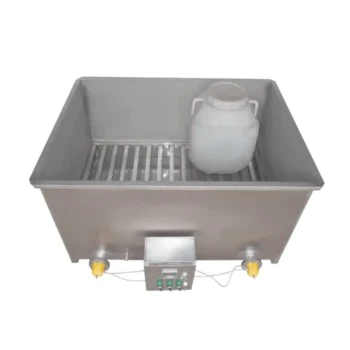
Heavy Duty Stainless Steel Honey Processing Machine Decrystallizing Tank

Electric Double Wall Honey Filtering Machine Purifier Equipment for Honey Processing Plant

Fully Automatic Honey Filling Packaging Machine for Processing Line

Electric Honey Press Machine for Squeezing Honey Comb Press Equipment

Commercial 48-Frame Stainless Steel Honey Extractor
