All Questions
What Are The Process Considerations For Using Disposable Plastic Cups And Filtration Consumables For Honey? - Honestbee
Learn why disposable plastic cups and filtration consumables are vital for honey post-digestion to prevent contamination and protect instruments.
Why Is It Necessary To Use Qualitative Filter Paper For Filtration After The Alcoholic Extraction Of Propolis?
Learn why qualitative filter paper is essential for propolis extraction to ensure purity, protect equipment, and achieve product consistency.
How Do Settling Tanks And Multi-Stage Filters Improve Honey Quality? Enhance Commercial Value With Physical Purification
Learn how settling tanks and multi-stage filters ensure honey clarity, hygiene, and shelf stability for the competitive retail market.
What Is The Primary Purpose Of Using Fine-Mesh Screens For Honey Processing? Ensure Purity While Preserving Raw Quality
Learn why fine-mesh screens are essential for filtering raw honey: removing macroscopic debris while retaining vital pollen and nutritional value.
What Is The Primary Role Of Industrial Filtration And Separation Equipment In The Purification Of Propolis?
Learn how industrial filtration removes heavy metals, eliminates radioactive contaminants, and ensures pharmaceutical-grade propolis purity.
Why Are Honey Filtration Equipment And Consumables Critical? Boost Market Value With Professional Processing
Learn how filtration and high-quality consumables transform raw honey into a high-value commodity by improving clarity and extending shelf life.
What Is The Primary Purpose Of Stainless Wire Mesh In Honey Refining? Ensure Purity & Commercial Clarity
Learn how stainless wire mesh acts as a critical filtration barrier to remove wax and debris, enhancing honey clarity and market value.
Why Is High-Quality Qualitative Filter Paper Utilized In The Final Filtration Stage Of Propolis Extraction? Boost Purity
Learn how high-quality qualitative filter paper ensures chemical purity and experimental integrity in propolis extraction by removing residues.
Why Is A Dedicated Royal Jelly Filter Necessary? Ensure Purity & Market Value In Post-Harvest Processing
Learn why filtering Royal Jelly is essential for removing wax and larval debris to meet industry purity standards and maximize commercial value.
Why Is Fine Muslin Cloth Considered An Essential Consumable In Honey Filtration? Ensure Purity & Market Quality
Discover why muslin cloth is vital for honey filtration, balancing visual clarity and organic purity with essential pollen retention.
What Is The Role Of Wire Mesh In The Sun-Based Honey Extraction Method? Optimize Solar Filtering Efficiency
Learn how wire mesh acts as a gravity-fed sieve and structural support in solar honey extraction to separate honey from wax.
Why Is A Funnel Equipped With A Filter Mesh Necessary During The Primary Processing Of Forest Honey?
Learn why using a filter funnel is essential for forest honey processing to remove impurities while preserving natural nutrients.
Why Are Stainless Steel Filters Essential During The Initial Purification Phase Of Honey Processing? Ensure Purity
Learn why stainless steel filters are vital for honey purity, preventing contamination and preserving sensory quality during processing.
What Is The Technical Justification For Selecting 10 Μm Filter Paper For Honey? Achieve Precise Purity Analysis
Learn why 10 μm quantitative filter paper is the industry standard for honey vacuum filtration, balancing flow rate with contaminant retention.
What Are The Advantages Of Implementing Insect-Proof Nets And Filtration Systems? Ensure Purity In Honey Packaging
Discover how insect-proof nets and high-precision filtration improve honey purity, protect equipment, and ensure food safety compliance.
What Is The Primary Purpose Of Honey Filters And Strainers? Ensure Purity And Clarity In Every Batch
Learn why honey filters and strainers are essential for removing debris, ensuring food safety, and achieving commercial-grade honey clarity.
What Are The Standard Mesh Sizes For Honey Filters? Choose The Right Micron For Optimal Clarity
Learn about 200, 400, and 600-micron honey filter mesh sizes to balance honey flow rate and visual clarity during your harvest.
Why Is It Difficult To Remove Pollen From Honey? Understand The Limits Of Standard Straining Equipment
Discover why standard 200-micron filters fail to catch 25-micron pollen grains and learn the science behind honey filtration and centrifugation.
How Does The Size Of The Largest Pollen Granules Compare To The Mesh Of A 200 Micron Honey Filter?
Learn why a 200-micron honey filter allows pollen to pass through while effectively removing wax and debris to preserve raw honey quality.
What Is The Micron Equivalent Of A 1/4 Inch Hole? Essential Honey Filtration Guide
Learn why a 1/4 inch hole equals 6,350 microns and how this coarse straining level preserves raw honey's pollen and nutritional integrity.
How Does A Fine Filtration System Ensure The Quality Of Honey? Achieve Commercial Grade Purity And Shelf Stability
Learn how honey filtration removes impurities, delays crystallization, and ensures food safety using professional stainless steel equipment.
What Is The Function Of A Fine-Mesh Sieve In The Initial Pretreatment Of Honey Samples? Ensure Accurate Lab Analysis
Learn how fine-mesh sieves remove impurities and protect analytical accuracy during the pretreatment of honey samples for lab testing.
How Do Multi-Layer Filters Ensure Product Purity In Honey Processing? Enhance Your Honey's Clarity And Quality
Learn how multi-layer filtration removes impurities, ensures food safety compliance, and preserves honey quality in commercial apiaries.
What Is The Primary Function Of A 0.5 Mm Mesh Sieve In Honey Sample Pretreatment? Achieve Pure Analytical Results
Learn how 0.5 mm mesh sieves purify honey samples by removing debris while preserving pollen for accurate lab analysis.
Why Is Pre-Treatment With A 0.45 Μm Syringe Filter Necessary For Honey Analysis? Protect Your Hplc System
Learn why 0.45 µm filtration is essential for honey extract chromatography to prevent column clogging and ensure precise data.
What Are The Technical Advantages Of Using Professional Filtration For Honey? Optimize Clarity And Quality
Learn how professional honey filtration removes impurities, enhances clarity, and extends shelf life while preserving nutritional value.
Why Is It Necessary To Use A High-Mesh Fine Filter Cloth For Honey? Optimize Wild Honey Purity And Stability
Learn why high-mesh filtration is vital for wild honey like Apis dorsata to remove larvae, wax, and debris while preventing rancidity.
Why Is High-Precision Filter Paper Used Before The Drying Stage Of Propolis Extraction? Achieve Maximum Purity
Learn how high-precision filtration removes beeswax and debris to ensure high-purity propolis powder and protect analytical instruments.
How Does The Mesh Size Of Honey Filtration Equipment Affect Biological Characterization? Expert Guide For Accuracy
Learn how mesh size impacts honey's biological profile, botanical origin identification, and the trade-offs between clarity and data integrity.
How Do Centrifugation And Filtration Technologies Ensure The Safety Of Honey? Detecting Risks For Infant Consumption
Learn how centrifugation and microporous filtration facilitate spore detection to prevent infant botulism in honey products.
Why Are High-Precision Filtration Systems And Settling Tanks Essential? Elevate Your Honey Quality And Clarity
Learn why filtration and settling are vital for honey refining to remove impurities, ensure safety, and maintain premium visual clarity.
How Do Double-Layer Honey Filters And White Blotting Paper Function Together In Varroa Mite Detection? Expert Guide
Learn how the synergy between double-layer honey filters and white blotting paper ensures accurate Varroa mite isolation and visualization.
What Is The Function Of Disposable Filtration Consumables? Ensure Pure, Market-Ready Honey For Retail Excellence
Discover how disposable filtration consumables remove impurities, enhance clarity, and ensure food safety in honey processing workflows.
What Is The Function Of A 100 Μm Industrial Filter In Honey Processing? Enhance Clarity And Prevent Crystallization
Learn how 100 µm industrial filters remove impurities, improve honey clarity, and delay crystallization for commercial-grade stability.
What Is The Function Of Fine-Mesh Metal Sieves In Honey Filtration? Improve Sample Clarity For Precise Analysis
Learn how fine-mesh metal sieves remove impurities and optimize honey samples for melissopalynology and quality testing.
Why Does Honey Production From Africanized Honeybees Require Efficient Filtration? Scale Your Output Successfully
Learn why high-efficiency filtration and filling equipment are vital for processing the high-viscosity, high-volume surges of Africanized honeybees.
How Does A Stainless Steel Filtration System Protect Product Quality? Ensure Purity & Stability In Honey Processing
Learn how stainless steel filtration protects honey from chemical contamination, ensures clarity, and maintains regulatory food safety standards.
How Do Fine-Mesh Screens And Filter Fabrics Ensure The Quality Of Processed Honey? Master Your Honey Refining Process
Learn how precision filtration removes impurities, enhances clarity, and delays crystallization to meet global honey purity standards.
What Specific Issues Are Addressed By Using Fine Filter Cloth During Honey Refining? Ensure Purity And Clarity
Learn how fine filter cloth removes impurities like wax and larval debris to improve honey clarity, hygiene, and shelf appeal.
What Is The Function Of The Inverted Conical Weaving Basket? Master Primary Honey Filtration & Purity
Learn how the inverted conical weaving basket uses gravity to separate liquid honey from wax and debris for high-quality honey production.
What Is The Importance Of High-Mesh Nylon Filtering Cloth In Honey Processing? Ensure Purity & Retain Natural Quality
Learn how high-mesh nylon filters remove impurities like wax and debris while preserving essential pollen for high-quality, authentic honey.
What Is The Primary Function Of Fine-Pore Filtration Consumables In Honey Processing? Ensure Quality And Purity
Learn how fine-pore filtration protects honey quality by removing organic debris, preventing spoilage, and ensuring market-standard clarity.
What Are The Key Functions Of Specialized Linen Filter Bags? Optimize Your Beeswax Purity And Pressing Yield
Learn how specialized linen filter bags enable high-pressure separation, ensuring pure beeswax extraction by trapping debris and solids.
What Is The Purpose Of The Settling And Filtration Process After Honey Extraction? Master Honey Purity And Market Grade
Learn how settling and filtration remove impurities, improve honey clarity, and extend shelf life for professional honey production.
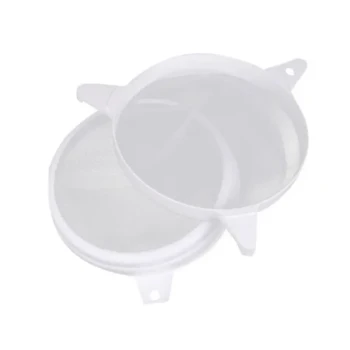
What Is The Function Of A Plastic Double Sieve In Honey Filtration? Ensure Pure, High-Quality Raw Honey Results
Learn how the plastic double sieve uses dual-mesh filtration to remove debris and maintain honey quality without heat processing.
What Role Does A Sump With A Vertical Sieve Play In The Honey Extraction Line? Boost Efficiency & Prevent Clogs
Learn how a sump with a vertical sieve acts as the first line of defense in honey extraction, protecting equipment and accelerating production.
Why Is A 200-Mesh Fine Mesh Filter Necessary During The Harvesting Stage Of Ripened Honey? Ensure Commercial Purity
Learn why 200-mesh filtration is vital for honey harvesting, ensuring optical clarity, removing micro-impurities, and meeting retail standards.
Why Is A High-Precision Filtration System Necessary For Honey? Ensure Purity And Eu Compliance
Learn why high-precision filtration is vital for honey processing: removing impurities, extending shelf life, and maintaining regulatory standards.
What Is The Function Of High-Performance Filters In Honey Pretreatment? Protect Your Lab Equipment And Data Accuracy
Learn how high-performance filters protect HPLC/ICP systems and improve honey analysis accuracy by removing impurities.
What Is The Primary Function Of A High-Mesh Stainless Steel Sieve In Honey Processing? Ensure Purity And Clarity
Learn how high-mesh stainless steel sieves remove impurities, enhance honey clarity, and prevent fermentation for commercial-grade honey quality.
What Are The Technical Advantages Of Using Food-Grade Filter Cloth For Honey Filtration Compared To Manual Squeezing?
Discover why food-grade filter cloth outperforms manual squeezing by providing micro-level purity and preserving honey's biological integrity.
What Are The Functional Differences Between Manual Drainage And Screen Filtration? Master Professional Honey Purity
Learn how screen filtration outperforms manual drainage by removing fine impurities to achieve commercial-grade honey clarity.
Why Is The Use Of Professional Filtration Materials And Cleaning Equipment Essential? Elevate Your Honey Quality
Discover why professional filtration and cleaning are vital for commercial honey production, ensuring purity, safety, and market consistency.
What Are The Benefits Of Implementing A Gravity Filtering System In High-Quality Honey Post-Processing? Preserving Purity
Discover how gravity filtration preserves honey's nutritional integrity, improves clarity, and prevents crystallization for premium quality results.
What Is The Importance Of Clarification And Filtration In Honey? Ensure Purity & Prevent Fermentation
Discover how industrial-grade filtration removes impurities and inhibits fermentation to stabilize honey quality and shelf life.
How Does Industrial-Grade Honey Filtration Equipment Contribute To Honey Quality? Boost Value And Purity
Learn how industrial-grade honey filtration equipment enhances purity, sensory appeal, and shelf life to command premium market pricing.
Why Use Fine-Pored Filtration For Bee Feed? Ensure Colony Health And Equipment Reliability
Learn why fine-pored filtration is critical for processing rice bran or corn meal bee feed to prevent clogs, fermentation, and hive hygiene issues.
Why Are Filters And Funnels Considered Essential Consumables? Secure Quality In Stingless Bee Honey Harvesting
Learn why filtration is vital for stingless bee honey to prevent fermentation, remove contaminants, and ensure commercial viability.
How Does The Filtration Process Differ Between Raw Honey And Usda Grade A Honey? Retention Vs. Removal Explained
Learn the key differences between raw honey straining and USDA Grade A ultra-filtration, focusing on nutrient retention and visual clarity.
What Is The Technical Necessity Of Using Double-Layered Sieves? Optimize Varroa Mite Monitoring Accuracy
Learn why double-layered sieves are essential for Varroa mite monitoring, ensuring precise fractional filtration and accurate infestation data.
How Does A Multi-Layer Stainless Steel Honey Strainer Improve Quality? Ensure Pure, Professional-Grade Honey Results
Learn how multi-layer filtration enhances honey clarity, prevents crystallization, and extends shelf life by removing physical impurities.
How Does The Use Of Cheesecloth As A Filtration Medium Improve The Quality Of Harvested Honey? Enhance Purity & Value
Learn how cheesecloth filtration removes wax and debris to improve honey clarity, market value, and sensory quality for professional beekeeping.
What Are The Functional Benefits Of Using High-Mesh Nylon Filter Cloth In Honey Processing? Enhance Purity And Stability
Learn how high-mesh nylon filter cloth improves honey clarity, delays crystallization, and ensures superior shelf stability for retail products.
Why Is The Selection Of Fine Filtration Equipment And Consumables Critical In The Clarification Stage Of Propolis Extraction?
Discover why precision filtration is vital for propolis integrity, ensuring accurate chemical analysis and protecting laboratory instruments.
What Is The Importance Of Professional Filtration And Packaging Equipment? Transform Raw Honey Into High-Value Brands
Learn how professional honey filtration and packaging equipment ensure purity, prevent fermentation, and meet global standards for market access.
What Role Do Professional Honey Filters Play In Enhancing The Purity Of Raw Honey? Achieve Market-Ready Clarity
Learn how professional honey filters remove debris, prevent fermentation, and control crystallization to ensure high-quality, stable raw honey.
What Steps Should Be Taken To Ensure Honey Clarity? Expert Tips For Professional Results
Learn how to achieve crystal-clear honey through mechanical straining, gravity settling, and optimized centrifugal extraction techniques.
Why Is It Necessary To Use A Honey Strainer Before Bottling? Ensure Pure, Crystal Clear Honey Quality
Learn why straining honey is vital for hygiene, visual clarity, and slowing crystallization to ensure a professional, high-quality final product.
What Is The Purpose Of Using A Double Sieve Stainless-Steel Strainer In Honey Production? Achieve Pure, Bottled Results
Learn how a double sieve stainless-steel strainer removes wax and debris to ensure hygienic, professional-grade honey ready for bottling.
How Does Fine-Mesh Filter Cloth Contribute To The Honey Processing Workflow? Achieve Purity In Apis Mellifera Honey
Learn how fine-mesh filter cloth ensures honey purity, clarity, and compliance by removing impurities during the extraction workflow.
Why Is Fine-Mesh Nylon Filter Cloth Required In Royal Jelly Filtration? Ensure Purity And 10-Hda Stability
Learn why fine-mesh nylon filter cloth is essential for royal jelly: removing debris, ensuring smooth texture, and protecting bioactive 10-HDA.
What Is The Purpose Of Heating Honey Samples To 50°C During Physical Contaminant Analysis? Optimizing Filter Accuracy
Learn why heating honey to 50°C is critical for reducing viscosity, ensuring effective filtration, and detecting physical contaminants accurately.
Why Is Qualitative Filter Paper Considered An Essential Consumable In Honey Purity Detection? Achieve High-Purity Results
Discover how qualitative filter paper isolates honey contaminants for accurate microscopic analysis and ensures the highest purity standards in testing.
What Are The Advantages Of Using White Fine-Mesh Filters In Varroa Mite Separation? Enhance Your Counting Accuracy
Discover how white fine-mesh filters improve Varroa mite detection through superior visual contrast and streamlined separation workflows.
What Is The Purpose Of Using High-Strength Stainless Steel Mesh And Graduated Collection Containers? Pure Bee Honey Tips
Learn how stainless steel mesh and graduated containers preserve enzymes and ensure traceability in stingless bee honey extraction.
What Is The Primary Function Of Single-Layer Fine Mesh Filter Cloth In Honey Purification? Essential Clarity Tips
Learn how single-layer fine mesh filter cloth removes impurities like wax and debris while preserving the natural pollen in multifloral honey.
What Is The Function Of Fine Nylon Mesh In Stingless Bee Honey Separation? Optimize Your Primary Filtration Process
Learn how fine nylon mesh acts as the critical primary filtration medium to remove cerumen and impurities from stingless bee honey using gravity.
What Is The Function Of Fine-Mesh Filtration Materials Like Gauze? Ensure Purity In Initial Honey Processing
Learn how fine-mesh filtration removes impurities like wax and debris to ensure honey sample purity, homogeneity, and accurate analytical results.
What Role Do Wire Mesh Or Muslin Cloth Consumables Play In The Primary Stage Of Honey Filtration? Enhance Honey Clarity
Learn how wire mesh and muslin cloth remove impurities, maintain hygiene, and preserve botanical characteristics in honey filtration.
Why Are Dual Filtration Sieves Used In Honey Processing? Balance Purity & Nutrition For Professional Honey Production
Learn how dual filtration sieves optimize honey clarity and retain nutrition by removing wax debris while preserving essential pollen grains.
What Is The Function Of Honey Filtering Materials? Elevate Clarity And Market Value
Learn how honey filtering materials enhance commercial value by removing impurities, extending shelf life, and ensuring premium food safety standards.
Why Is An 80-Micron Precision Filter Typically Used For Honey? Ensure International Purity & Compliance
Learn why 80-micron filtration is the industry standard for removing debris, meeting Codex standards, and improving honey clarity.
What Is The Role Of Specialized Settling Containers With Side Nozzles? Optimize Your Honey Primary Filtration
Learn how settling containers with side nozzles use gravity to separate impurities, improving honey purity and protecting your filtration equipment.
How Do Filtration And Clarification Processes Contribute To The Market Competitiveness Of Honey Products? Elevate Value
Learn how professional honey filtration and clarification enhance visual clarity, shelf stability, and global market competitiveness.
How Do Perforated Plastic Strainers Function In Honey Filtration? Master Sequential Refinement For Purity
Learn how perforated plastic strainers use sequential filtration to remove fine debris and wax, ensuring high-clarity commercial honey.
What Is The Value Of Industrial-Grade Filter Tanks In Large-Scale Beekeeping? Scale Your Honey Processing Quality
Learn how industrial-grade filter tanks enhance honey clarity, ensure hygiene, and standardize quality for commercial beekeeping operations.
What Critical Function Does A Mesh Sieve Perform? Ensure Purity In Liquid Honey Processing
Discover how a mesh sieve filters wax, larvae, and hairs to transform raw honeycomb into high-clarity, market-ready liquid honey.
What Are The Specific Functions Of Industrial-Grade Sterile Sampling Containers And Filter Cloths? Ensure Honey Purity
Learn how sterile containers and filter cloths protect honey sample integrity by preventing contamination and ensuring homogeneity during analysis.
How Is A Double-Layer Honey Filter Used For Monitoring Varroa Mite Infestation? Achieve Precise Pest Control Data
Learn how double-layer filters streamline Varroa mite monitoring by isolating mites for accurate counting and standardized infestation data.
What Role Does Fine Cheesecloth Play In High-Purity Honey Preparation? Ensure Safe Feed For Trichogramma
Learn how fine cheesecloth acts as a critical primary filter to remove wax and debris, protecting delicate insects from mechanical feeding risks.
What Is The Primary Function Of An Industrial Stainless Steel Mesh Screen? Enhance Honey Purity & Protect Machinery
Learn how industrial stainless steel mesh screens (0.5mm) remove impurities from raw honey to ensure product quality and protect downstream equipment.
What Role Do Fine Mesh Filter Bags Play In Afb Spore Extraction? Enhance Purity In Bee Sample Pre-Treatment
Learn how fine mesh filter bags enable efficient AFB spore recovery by isolating debris and reducing centrifugation load for cleaner extracts.
What Is The Function Of Using Sterile Gauze Or Swabs To Filter Honey Samples? Ensure Accurate P. Larvae Detection
Learn why filtering honey samples with sterile gauze is essential for removing debris and ensuring accurate Paenibacillus larvae culture results.
What Is The Primary Purpose Of Using Sieve Cloth During Honey Extraction? Master Pure Honey Filtration Techniques
Learn how sieve cloth effectively separates liquid honey from beeswax and debris during extraction to ensure high-purity, clear honey products.
How Does Fine Mesh Filter Cloth Affect Honey Pre-Treatment? Ensure Accurate Lab Analysis & Data Reliability
Learn how high-precision filter cloth improves honey analysis by removing microscopic debris and ensuring consistent TRS/NRS test results.
What Is The Simple Straining Method For Honey Processing? A Guide To Raw Honey For Hobbyists
Learn the simple straining method for honey processing: a cold, raw technique for hobbyists to clean honey while preserving its natural enzymes and pollen.
Is It Necessary To Filter Honey After Extraction? A Guide To Straining Vs. Raw Honey
Learn the pros and cons of filtering honey after extraction, from achieving clarity to preserving raw benefits for your target market.
How Should Extracted Honey Be Filtered And Stored? A Guide To Preserving Quality And Purity
Learn the best practices for filtering honey to remove debris and proper storage techniques to maintain flavor and prevent spoilage for years.
What Is The Role Of A Honey Filter In Ensuring Purity? Achieve Clean, High-Quality Honey
Learn how honey filters remove wax, bee parts & debris to ensure purity while preserving natural flavor and beneficial enzymes.
What Are The Advantages Of Using Honey Strainers? A Simple, Low-Cost Path To Pure Honey
Discover the key benefits of honey strainers: simplicity, low cost, and effectiveness for hobbyists and small-scale beekeepers to filter honey cleanly.
Related Products

Stainless Steel Double Layer Honey Strainer Sieve Filters

Nylon Honey Strainer Square Filter Cloth for Honey Filters

Stainless Steel Triangle Support Honey Strainer and Filters

Electric Double Wall Honey Filtering Machine Purifier Equipment for Honey Processing Plant

Professional Stainless Steel Honey Filtering Machine with Water Bath Heating for Beekeeping