All Questions
How Is A Photoelectric Colorimeter Utilized To Assess Honey Quality? Detect Heat Damage And Aging With Precision
Learn how photoelectric colorimeters use diastase activity and HMF levels to quantify honey degradation during storage and processing.
How Does Specialized Industrial Honey Equipment Maintain Quality? Preserve Premium Flavor And Purity
Learn how industrial-grade honey equipment uses temperature control and filtration to preserve enzymes, flavor, and export quality.
What Is Bulk Processing For Honey? A Guide To Efficient Large-Scale Honey Clarification
Learn about bulk honey processing: a gentle, gravity-fed method using heat and settling to clarify large volumes efficiently while preserving quality.
What Is Involved In Honey Processing? From Hive To Jar For Perfect Quality
Learn the key steps of honey processing: extraction, filtration, heating, and packaging. Understand how methods affect quality for raw or commercial honey.
What Are The Requirements For The Space Used In Processing Bee Products? Ensure A Safe, Bee-Proof Environment
Learn the essential requirements for a bee product processing space, including bee-proofing, sanitation, and workflow design for food safety.
What Is An Efficient Method For Processing Honey When Dealing With Dozens Of Hives? Scale Up Your Apiary's Harvest
Discover efficient honey processing methods for dozens of hives, from fruit presses to centrifugal extractors, to streamline your harvest and maximize yield.
How Is Honey Processed From Warre Hives Using Mason Jars? A Simple Crush And Strain Guide
Learn the step-by-step crush and strain method for harvesting honey from Warre hives using mason jars. Simple, low-cost, and effective for natural comb.
What Happens To Honey During Pasteurization? A Trade-Off Between Stability And Nutrition
Discover how pasteurizing honey kills wild yeast to prevent fermentation but reduces beneficial enzymes and nutrients. Learn the raw vs. pasteurized trade-off.
How Is Processed Honey Made? The Industrial Process And Its Impact On Your Honey
Discover the two-step process of pasteurization and ultrafiltration used to create processed honey and the trade-offs involved.
What Equipment Is Used For Honey Harvesting? Build Your Perfect Harvesting Toolkit
Essential honey harvesting equipment guide: from bee brushes to extractors and refractometers. Choose the right tools for your beekeeping scale.
How Do Automatic Honey Processing Machines Improve Efficiency? Boost Your Production Speed & Quality
Discover how automated honey processing machines increase efficiency by streamlining extraction, filtration, and bottling for consistent, high-quality honey.
What Should Be Considered When Selecting A Honey Supplier For A Processing Line? Secure Your Product's Quality & Consistency
Learn the 4 critical pillars for choosing a reliable honey supplier: quality, reliability, safety compliance, and transparent pricing for your processing line.
Why Is 304 Stainless Steel Used In Honey Processing? Protect Your Honey's Purity & Flavor
Discover why 304 stainless steel is the industry standard for honey equipment, offering superior corrosion resistance, durability, and food safety.
What Role Does Vacuum Technology Play In Professional Honey Processing? Preserve Quality & Ensure Consistency
Learn how vacuum technology removes excess water from honey at low temperatures to prevent fermentation and preserve delicate enzymes and flavors.
What Factors Should Be Considered When Choosing Honey Processing Equipment? A Guide For Commercial Apiaries
Key factors for choosing honey processing equipment: operation scale, product type, and budget. Learn how to build an efficient system.
What Role Does Quality Processing Equipment Play In Honey Production? Ensure Purity, Safety, And Efficiency
Discover how quality honey processing equipment preserves natural enzymes, ensures food safety, and boosts operational efficiency for commercial apiaries.
What Are The Key Components Of A Honey Processing Machine? Build Your Efficient Honey Production Line
Learn the 5 key components of a honey processing machine: extractor, filter, heater, homogenizer, and packaging unit for pure, market-ready honey.
What Are The Main Processes Involved In Honey Processing? From Hive To Jar, A Complete Guide
Learn the 5 key steps of honey processing: extraction, filtration, heating, homogenization, and packaging. Understand how each stage affects honey quality.
What Is A Honey Processing Machine? A Complete Guide To Automated Honey Production
Discover how honey processing machines automate extraction, filtration, and packaging to increase output and standardize quality for commercial producers.
What Is The Importance Of Using The Right Tools In Honey Production? Boost Quality, Yield & Profitability
Learn how the right beekeeping tools impact honey purity, increase harvest efficiency, and build a profitable, sustainable operation.
What Are Some Examples Of Honey Packaging Types? Choose The Best For Your Brand
Explore honey packaging options: glass jars, plastic bottles, and pouches. Learn how to choose based on branding, protection, and consumer needs.
What Factors Should Be Considered When Choosing Honey Packaging? Optimize For Brand, Operations & Market
Learn how to select honey packaging by evaluating materials, production scale, and target market to enhance brand appeal and operational efficiency.
What Type Of Machine Is Recommended For Large-Scale Honey Production? Boost Efficiency With Automation
Discover why automatic honey processing machines are essential for large-scale apiaries to maximize throughput, ensure consistency, and reduce labor costs.
What Features Should A Machine Have To Handle Honey's Viscosity Effectively? Ensure Accurate, Clean Filling
Discover essential honey filling machine features: piston pumps, heated systems, and anti-drip nozzles for precise, efficient packaging.
What Type Of Machine Is Suitable For Packaging Honey Sticks Or Tubes? A Guide To Stick Pack Machines
Discover the ideal vertical form-fill-seal machine for packaging honey sticks, featuring piston fillers for precise, consistent results.
What Factors Should Be Considered When Choosing A Honey Packaging Machine? Optimize Your Production Line
Learn how production volume, honey viscosity, and container type determine the right honey packaging machine for your business, from small-scale to large-scale operations.
What Are The Typical Uses Of Vffs And Hffs Machines? Choose The Right Packaging Automation
Discover the key differences between VFFS and HFFS machines to select the ideal system for your product's packaging needs.
What Types Of Products Are Better Handled By Hffs Machines? Ideal For Delicate, Sticky, Or Viscous Items
Discover why HFFS machines excel at packaging delicate, sticky, or viscous products with superior control and gentle handling compared to VFFS machines.
What Is The Key Difference Between Vffs And Hffs Machines? Choose The Right Packaging Solution
Discover the key difference between VFFS and HFFS machines: vertical gravity-fed vs. horizontal controlled packaging. Make the right choice for your product.
What Do Vffs And Hffs Stand For In Packaging Machines? Choose The Right System For Your Product.
VFFS and HFFS explained: Learn the difference between Vertical and Horizontal Form Fill Seal machines to optimize your packaging line.
What Are The Advantages Of Honey Pouches? Reduce Shipping Costs And Boost Convenience
Discover the key benefits of honey pouches: lightweight design for lower shipping costs, resealable spouts for easy pouring, and efficient storage.
What Are Honey Sticks And Their Benefits? Unpacking On-The-Go Honey Convenience
Discover honey sticks: single-serving, portable honey tubes. Learn their benefits for energy, sweetening, and convenience, plus key trade-offs vs. jars.
What Are Honey Sachets And Their Typical Use? A Guide To Portion-Controlled Convenience
Discover the uses of honey sachets for hotels, cafes, and on-the-go consumers. Learn about their benefits in hygiene, portion control, and portability.
What Customization Options Are Available For Honey Processing Equipment? Tailor Your System For Maximum Efficiency
Explore key customizations for honey processing equipment—from tank size to automation—to optimize your scale, product quality, and operational efficiency.
What Are The Features Of The Processing Tanks Offered? Engineered For Purity And Efficiency
Explore stainless steel honey processing tanks: vats, pasteurizers, liquefiers, and cooker/coolers. Ensure purity, durability, and precise temperature control.
What Are The Initial Steps To Consider When Starting A Honey Processing Plant? Build A Resilient Foundation
Learn the key first steps to start a honey processing plant, from defining capacity and workflow to choosing the right equipment and location.
Why Is Maintaining Proper Viscosity Important For Honey Producers? Unlock Efficiency And Protect Quality
Learn how proper honey viscosity management boosts bottling speed, prevents equipment clogs, and preserves vital nutrients and flavor for commercial apiaries.
What Are The Steps Involved In The Honey Processing Manufacturing Process? From Hive To Table
Learn the key stages of honey processing: harvesting, extracting, filtering, heating, and packaging for purity and consistency.
How Can Honey Processing Equipment Help In Maximizing Production Efficiency? Automate To Scale Your Apiary
Learn how honey processing equipment like extractors and fillers automates labor, boosts yield, and ensures quality for commercial beekeepers.
What Types Of Honey Processing Equipment Are Available? A Guide To Scalable Systems
Explore honey processing equipment, from manual extractors to automated systems. Learn how to choose the right tools for your scale and product goals.
What Are The Key Components Of A Honey Processing Plant? Build Your Efficient Honey Production Line
Learn the essential honey processing plant components, from extraction to packaging, for producing high-quality, market-ready honey efficiently.
What Is The Conventional Thermal Processing Method For Honey? A Guide To Commercial Honey Production
Learn the step-by-step conventional honey processing method, its goals, and the trade-offs between processed and raw honey for commercial beekeeping.
Why Is Honey Processing Essential? Ensuring Quality And Shelf Life For Your Product
Discover why honey processing is vital for purity, stability, and consumer safety. Learn key steps from extraction to packaging.
What Is The Purpose Of The Pasteurization Process In Honey Packaging? A Guide To Texture Control & Quality
Discover why honey is pasteurized: to prevent crystallization for a smooth, liquid product, not for safety. Learn the trade-offs vs. raw honey.
What Is The Purpose Of A Honey Storage Tank? Streamline Your Honey Processing For Quality & Efficiency
A honey storage tank is crucial for clarification, temperature control, and batch consistency in processing. Learn its strategic role for quality honey.
What Is The Workflow Of A Honey Processing Machine? A Step-By-Step Guide To Commercial Honey Production
Learn the 6 key stages of honey processing, from extraction to filling, to ensure clarity, stability, and shelf life for your commercial honey products.
What Equipment Is Commonly Used For Heating And Processing Honey? Essential Tools For Every Beekeeper
Discover the best honey heating equipment, from heat blankets to jacketed tanks, to process honey efficiently while preserving its natural quality.
Why Is Heating Used In Honey Processing? A Guide To Balancing Quality And Efficiency
Discover why honey is heated for processing, its effects on enzymes & flavor, and how to choose between raw and commercial honey for your needs.
What Steps Are Involved In The Honey Processing Workflow? A Guide To Purity And Shelf Stability
Learn the 6 essential steps of honey processing, from extraction to packaging, to ensure a pure, stable, and high-quality final product.
What Are The Benefits Of Using A Honey Processing Machine? Boost Quality & Scale Your Apiary
Discover how honey processing machines increase production capacity, ensure purity, and enhance honey quality for commercial beekeepers.
What Features Does A Honey Processing Machine Offer? A Guide To Quality, Efficiency, And Scalability
Discover the key features of honey processing machines: preheating, filtration, and low-temperature vacuum concentration for pure, high-quality honey.
What Steps Should Be Followed When Starting And Stopping The Vacuum Pump In The Honey Vacuum Thickener? Protect Your Honey & Equipment
Learn the critical start-up and shutdown sequence for honey vacuum thickener pumps to prevent contamination and equipment damage.
What Should Be Done With The Condensate In The Recovery Tank During The Concentration Process? Ensure Peak System Efficiency
Learn why promptly draining condensate from your recovery tank is critical for preventing backflow, maintaining vacuum stability, and ensuring product quality in concentration processes.
What Safety Precautions Should Be Taken When Operating The Honey Vacuum Thickener? Protect Your Apiary Investment
Essential safety steps for honey vacuum thickener operation: proper grounding, water management, and pump sequencing to prevent damage and ensure safety.
What Is Required For The Cooling System When Using Circulating Water In The Honey Vacuum Thickener? Essential Components For Efficient Processing
Learn the key requirements for a honey vacuum thickener cooling system: a 2+ ton water tank and a 0.37Kw pump for efficient, cost-effective operation.
How Is The Cooling System Configured When Using Tap Water In The Honey Vacuum Thickener? A Simple Guide For Beekeepers
Learn the direct plumbing setup for tap water cooling in honey vacuum thickeners, including key connections and operational considerations for efficiency.
What Are The Advantages Of The Honey Vacuum Thickener Equipment? Preserve Quality & Boost Efficiency
Discover how a honey vacuum thickener preserves natural enzymes & flavor with low-temperature processing, offering cost-effective concentration for SMEs.
What Are The Main Components Of The Honey Vacuum Thickener Equipment? A Guide To Preserving Honey Quality
Discover the 5 key components of a honey vacuum thickener and how they work together to remove water at low temperatures, preserving honey's natural quality.
What Additional Functions Does A Honey Vacuum Thickener Have? Achieve A Stable, Commercial-Grade Product
Discover how a honey vacuum thickener does more than concentrate—it melts crystals, filters impurities, and sterilizes for a market-ready product.
What Principle Does The Honey Vacuum Thickener Use To Concentrate Honey? Preserve Quality With Low-Temperature Evaporation
Discover how a honey vacuum thickener uses low pressure to evaporate water at safe temperatures, protecting honey's enzymes, flavor, and color.
What Happens To The Honey After It Is Extracted? A Beekeeper's Guide To Post-Harvest Processing
Learn the critical steps for handling honey after extraction, from filtering and storage to processing beeswax cappings and reusing frames.
What Are The Advantages Of Honey Processing Equipment? Boost Your Apiary's Efficiency & Honey Quality
Discover how honey processing equipment enhances efficiency, ensures purity, and offers a cost-effective solution for commercial beekeepers and distributors.
What Processes Can The Honey Processing Equipment Perform? Purify, Stabilize, And Scale Your Honey Production
Learn how honey processing equipment performs extraction, filtration, moisture removal, and blending to create a pure, stable, and market-ready product.
What Are The Essential Components Of A Honey Processing Machine? Optimize Your Honey Production Line
Discover the 5 key components of a honey processing machine: extractor, filter, heater, homogenizer, and packaging unit for efficient honey production.
What Is The Purpose Of A Honey Processing Machine? Streamline Your Apiary From Extraction To Bottling
Learn how a honey processing machine automates extraction, purification, and packaging to ensure consistent, high-quality, and shelf-stable honey for commercial production.
Why Is Quality Processing Equipment Important In Honey Production? Ensure Purity, Efficiency, And Brand Reputation
Discover how quality honey processing equipment preserves natural qualities, boosts efficiency, and ensures food safety for commercial producers.
How Should Production Capacity And Efficiency Be Evaluated In A Honey Processing Plant? Optimize Your Honey Supply Chain
Learn how to evaluate a honey processing plant's capacity, equipment, quality certifications, and logistics to ensure quality and efficiency.
What Are The Key Considerations For Beekeepers When Choosing A Honey Processing Plant? Ensure Quality And Efficiency For Your Apiary
Learn the essential factors for selecting a honey processing plant, including capacity, technology, certifications, and cost, to protect your product quality and brand.
What Factors Should Be Considered When Selecting A Honey Processing Plant? A Guide To Finding Your Perfect Partner
Learn the 6 key factors—capacity, technology, certifications, reputation, cost, and logistics—to select the right honey processing plant for your business.
What Are The Main Components Of A Honey Processing Machine? Unlock Efficient, High-Quality Production
Discover the 5 essential components of a honey processing machine: extractor, filter, heater, homogenizer, and packaging unit for pure, consistent honey.
What Are The Main Steps Involved In Honey Processing? A Guide To Purity, Quality, And Efficiency
Learn the key steps in honey processing: extraction, clarification, and packaging. Discover how to balance quality, shelf life, and natural properties.
What Is A Honey Processing Machine And What Are Its Benefits? Automate & Scale Your Honey Production
Discover how honey processing machines automate extraction, filtration, and bottling to increase efficiency, ensure hygiene, and deliver consistent quality for beekeepers.
What Is The Purpose Of Decanting In Honey Extraction? Achieve A Purer, More Stable Honey Product
Learn how decanting honey clarifies your harvest by removing impurities using gravity, resulting in a clearer, more professional final product.
What Is Done With The Honey After Extraction And Filtering? From Purification To Perfect Packaging
Learn the final steps of honey processing: final purification, bottling, and packaging methods for personal use or commercial sale.
How Is The Extracted Honey Collected And Tested For Quality? A Guide To Purity And Consistency
Learn the step-by-step process of honey collection, from extraction to filtering, and how quality is tested via sensory and lab analysis for purity.
What Are Two Methods For Processing Comb Honey Into Liquid Honey? A Guide For Hobbyists & Small-Scale Beekeepers
Compare the crush and strain method vs. pressing for processing comb honey. Learn the pros, cons, and best practices for small-scale beekeepers.
How Long Should Honey Sit Before Bottling? Achieve Crystal-Clear, Professional Honey
Learn the ideal 4-5 day settling period for honey bottling to ensure clarity, remove air bubbles, and create a premium final product.
How Long To Let Honey Settle Before Bottling? Achieve Crystal-Clear Honey For A Premium Product
Learn the ideal honey settling time (4-5 days) and how temperature affects it to ensure a brilliant, professional-quality final product.
How Is Honey Extracted Commercially? Maximize Your Apiary's Efficiency And Honey Yield
Discover the commercial honey extraction process using centrifugal force to preserve wax combs, increase yield, and efficiently process hundreds of hives.
What Is The Heat Method Of Processing Honey? Balancing Shelf Life With Natural Quality
Explore the heat method of honey processing: its role in filtration and pasteurization, and the trade-offs between shelf life and natural benefits.
How Is Honey Heat Treated? Balancing Commercial Quality With Natural Integrity
Learn how honey pasteurization works, its impact on enzymes and flavor, and the key differences between raw and processed honey for commercial use.
Does Heating Honey Pasteurize It? Understanding The Trade-Offs For Your Beekeeping Business
Learn how honey pasteurization works, its impact on enzymes & quality, and how to choose the right process for your apiary's products.
What Is Heat Treatment For Honey? A Guide To Liquefying, Pasteurizing, And Preserving Quality
Learn the goals of heating honey, from gentle liquefaction to pasteurization, and the critical temperature control needed to preserve its natural enzymes and flavor.
Do You Have To Heat Honey Before Bottling? A Guide To Quality Vs. Efficiency
Explore the pros and cons of heating honey for bottling. Learn how to balance flow efficiency with preserving raw quality, enzymes, and flavor.
How Is Honey Processed Step By Step? From Hive To Jar: Raw Vs. Commercial Methods
Learn the complete honey processing steps: harvesting, uncapping, extracting, and filtering. Understand the key differences between raw and commercial honey.
What Is Needed To Process Honey? Essential Equipment & Stages For Pure Honey
Learn the 4 key stages of honey processing: harvesting, extraction, clarification, and bottling. Find the right tools for your scale, from hobbyist to commercial.
What Is Honey Packaging? A Guide To Protecting Quality & Boosting Sales
Discover the essentials of honey packaging: materials, functions, and how to choose the right solution for your brand's quality and market goals.
What Is The Main Purpose Of Sachet Forming Machines? Unlock Scalable, Automated Packaging
Discover how sachet forming machines automate packaging for powders, liquids & pastes to boost efficiency, ensure precise dosing, and drive growth.
What Is The Difference Between A Sachet And A Pouch? Optimize Your Packaging Strategy
Learn the key differences between sachets and pouches for single-use convenience vs. multi-use retail packaging. Make the right choice for your product.
How Do I Choose A Packing Machine? A Guide To Strategic Investment And Seamless Integration
Learn how to select the right packing machine by evaluating speed, flexibility, total cost of ownership, and vendor support for your business.
How Many Bags Can The Packaging Machine Make Per Minute? Unlock The Right Speed For Your Production Line
Discover packaging machine speeds from 30 to 400+ bags per minute. Learn how to match machine output to your production volume and scale.
How Do You Pack A Sachet? Master The High-Speed Vffs Process For Mass Production
Discover the vertical form fill seal (VFFS) process, the automated method for high-speed, efficient sachet packaging used in modern manufacturing.
What Is Honey Packing? The Critical Step From Hive To Marketplace
Honey packing is the industrial process of bottling bulk honey for retail or commercial sale, involving blending, quality control, and supply chain management.
How Does A Sachet Machine Work? Unpacking High-Speed Form-Fill-Seal Efficiency
Learn how a sachet machine automates the Form-Fill-Seal process for high-volume, low-cost packaging of powders, granules, and liquids.
What Method Is Used To Process Honey? From Extraction To Bottling For Perfect Consistency
Learn the key steps of honey processing: extraction, filtration, heating, and packaging. Understand the trade-offs between raw and commercial honey.
What Equipment Do You Need To Process Honey? A Complete Guide For Every Scale Of Operation
Discover the essential honey processing equipment, from basic uncapping tools to commercial extractors and tanks, tailored for hobbyists and commercial apiaries.
How Long Do You Leave Honey To Settle? The 48-Hour Rule For Perfectly Clear Honey
Learn the crucial 48-hour settling process for honey to remove air bubbles and debris, ensuring a clear, stable, and high-quality final product.
How Long To Leave Honey To Settle Before Bottling? Achieve Perfect Clarity In 48 Hours
Learn why a 48-hour settling period is key for clear, professional honey. Discover the process for releasing air bubbles and removing fine wax particles.
What Are The Equipment Used In Honey Processing? Optimize Your Honey Yield And Quality
Discover the essential honey processing equipment, from uncapping tools to bottling systems, and how to choose the right setup for your scale.
Related Products
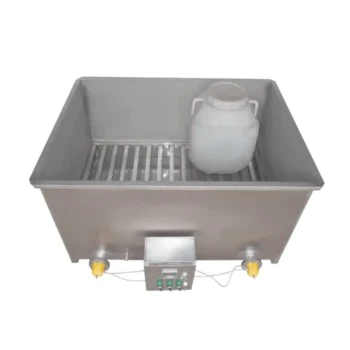
Heavy Duty Stainless Steel Honey Processing Machine Decrystallizing Tank

Electric Double Wall Honey Filtering Machine Purifier Equipment for Honey Processing Plant

Fully Automatic Honey Filling Packaging Machine for Processing Line

Electric Honey Press Machine for Squeezing Honey Comb Press Equipment

Commercial 48-Frame Stainless Steel Honey Extractor
