All Questions
How Do Honey Stick And Honey Sachet Machines Differ? Choose The Right Packaging For Your Honey
Learn the key differences between honey stick and sachet machines: viscosity handling, cost, and branding. Make the right choice for your honey product.
What Are The Different Types Of Seals Created By A Honey Stick Machine? Choose The Right Seal For Your Honey Sticks
Compare fin seal, lap seal, 3-side seal, and 4-side seal types for honey stick machines. Learn which seal is best for cost, protection, and efficiency.
What Are The Steps Involved In The Working Principle Of A Honey Stick Machine? Automate Your Honey Packaging
Learn the step-by-step form-fill-seal process of honey stick machines, from tube forming to sealing, for efficient single-serve packaging.
What Are The Advantages Of Continuous-Motion Honey Stick Packs? Unlock Unmatched Production Speed And Efficiency
Discover the key benefits of continuous-motion honey stick packing machines, including high-speed output, seamless operation, and superior efficiency for large-scale production.
What Are The Characteristics Of Intermittent-Motion Honey Stick Packs? Precision, Flexibility & Affordability
Explore the key traits of intermittent-motion honey stick machines: high-precision filling, operational flexibility, and a lower initial cost for startups.
What Is The Purpose Of A Shaped Honey Stick Machine? Boost Brand Appeal & Sales
Discover how a shaped honey stick machine uses unique seals to enhance product appeal, target children, and increase profitability for honey producers.
What Is The Function Of A Twin Honey Stick Machine? Double Your Honey Stick Production
Learn how a twin honey stick machine doubles output or packages two complementary products simultaneously, boosting efficiency for your apiary.
What Are The Features Of A Twin Honey Stick Machine? Double Your Production & Versatility
Explore the dual-hopper design, simultaneous production, and strategic benefits of a twin honey stick machine for scaling your business.
What Are The Characteristics Of A Standard Honey Stick Machine? Find The Right Machine For Your Production Scale
Explore the spectrum of honey stick machines, from single-lane to fully automated multi-lane systems, to match your production volume and business goals.
What Are The Different Types Of Honey Stick Machines Based On Honey Stick Style? Find Your Perfect Fit
Learn about single-lane vs. multi-lane and semi-automatic vs. fully automatic honey stick machines to match your production scale.
What Are The Features Of A Multi-Lane Honey Stick Machine? Achieve High-Volume Production For Your Apiary
Discover the key features of multi-lane honey stick machines, including synchronized automation and high-volume output for commercial beekeepers.
What Are The Characteristics Of A Single-Lane Honey Stick Machine? Compact, Flexible, And Perfect For Small-Scale Production
Discover the key features of single-lane honey stick machines: compact size, operational flexibility, and ideal capacity for startups and small apiaries.
What Are The Different Types Of Honey Stick Machines Based On The Number Of Lanes? Single-Lane Vs. Multi-Lane Guide
Compare single-lane and multi-lane honey stick machines. Learn about production capacity, ideal use cases, and how to choose the right machine for your operation.
What Are The Features Of An Automatic Honey Stick Machine? Maximize Your High-Volume Honey Production
Discover the key features of automatic honey stick machines, including multi-lane architecture, synchronized operations, and high-volume output.
What Are The Characteristics Of A Semi-Automatic Honey Stick Machine? Boost Your Packaging Efficiency
Learn the key traits of semi-automatic honey stick machines: ideal for small to medium-scale production with balanced automation and cost.
What Are The Different Types Of Honey Stick Machines Based On Automation? Choose The Right Model For Your Apiary's Scale
Compare semi-automatic vs. fully automatic honey stick machines. Learn how automation level impacts cost, output, and labor for your beekeeping business.
What Is The Purpose Of The Caster Wheels In A Honey Stick Machine? Enable Flexibility And Stability
Discover how caster wheels provide essential mobility and structural support for honey stick machines, enhancing production line efficiency and food safety.
What Is The Role Of The Emergency Stop Button In A Honey Stick Machine? A Critical Safety Mechanism Explained
Learn the critical role of the emergency stop button in honey stick machines: immediate shutdown to prevent injury and damage.
What Is The Function Of The Hmi Touch Screen In A Honey Stick Machine? Unlock Centralized Control For High-Volume Production
Discover how an HMI touch screen centralizes control, simplifies operation, and provides real-time diagnostics for automated honey stick packaging machines.
What Is The Purpose Of The Cutter In A Honey Stick Machine? The Key To Perfect, Single-Serve Packaging
Learn how the cutter in a honey stick machine separates filled sticks, ensuring efficient, waste-free production of single-serving honey products.
How Does The Horizontal Sealing Bar Operate In A Honey Stick Machine? Master The Final Sealing Step
Learn how the horizontal sealing bar uses heat and pressure to create leak-proof seals in honey stick production, ensuring efficiency and product quality.
What Is The Function Of The Vertical Sealing Bar In A Honey Stick Machine? Ensure Leak-Proof Honey Sticks
Learn how the vertical sealing bar creates the side seam of honey sticks, ensuring a leak-proof package with proper heat and pressure settings.
What Is The Role Of The Piston Pump In A Honey Stick Machine? The Heart Of Precise Honey Filling
Learn how the piston pump ensures accurate, consistent honey stick filling, prevents waste, and is key to production quality and efficiency.
How Does The Filling Station Work In A Honey Stick Machine? Achieve Perfect Fill Accuracy
Learn how a honey stick machine's filling station uses pumps and pistons for precise, controlled dispensing to ensure product consistency and profitability.
What Is The Function Of The Forming Tube In A Honey Stick Machine? It's The Heart Of Your Packaging Line
Learn how the forming tube shapes honey stick production, from film to finished pack, and its impact on your output efficiency and product design.
What Is The Purpose Of The Film Roller In A Honey Stick Machine? Prevent Spillage & Ensure Perfect Seals
Discover how the film roller's tension control prevents honey stick leaks and machine jams, ensuring efficient, high-quality packaging.
What Is The Role Of The Honey Hopper In A Honey Stick Machine? Ensuring Uninterrupted, High-Volume Production
Discover how the honey hopper acts as a critical buffer, ensuring consistent filling and minimizing downtime in honey stick packaging.
How Does The Unwinding Disk Function In A Honey Stick Machine? The Critical First Step In Packaging
Learn how the motor-driven unwinding disk feeds film, controls pace, and ensures quality in honey stick packaging machines for commercial apiaries.
What Is The Function Of The Motor In A Honey Stick Machine? Powering Your Honey Stick Production
Learn how the motor drives honey stick machine automation, from feeding film to sealing and cutting, impacting speed, precision, and efficiency.
What Are The Basic Components Of A Honey Stick Machine? A Complete Guide To Automated Packaging
Learn the key parts of a honey stick machine: film handling, forming tube, filling system, and sealing/cutting mechanisms for efficient production.
What Are The Advantages Of Using A Honey Stick Machine? Boost Efficiency & Expand Your Confectionery Line
Discover how honey stick machines drive cost savings, high-speed production, and product versatility for modern confectionery businesses.
How Does The Honey Stick Machine Benefit The Confectionery Industry? Boost Efficiency And Meet Consumer Demand
Discover how honey stick machines automate packaging for confectionery, cutting costs and creating popular single-serve stick packs for on-the-go products.
In Which Industrial Sectors Is The Honey Stick Machine Utilized? Beyond Honey To Boost Your Brand
Discover the wide industrial use of honey stick machines in food, beverage, cosmetics & nutraceuticals for single-serve packaging.
What Are The Advantages Of Using A Honey Stick Machine In Production? Boost Efficiency & Market Appeal
Discover how honey stick machines automate production for speed, consistency, and hygiene to create high-value single-serve products.
What Is A Honey Stick Machine Used For? Transform Bulk Honey Into Profitable Single-Serve Sticks
Learn how honey stick machines automate packaging for single-serve honey sticks. Compare types, from standard to automatic, for your production scale.
What Are The Pros And Cons Of Pump-Based Systems In Honey Filling Machines? Speed Vs. Cost For High-Volume Production
Explore the key advantages and disadvantages of pump-based honey filling machines for high-speed, automated production lines, including cost and precision trade-offs.
What Are The Pros And Cons Of Piston Filling In Honey Filling Machines? Precision Vs. Speed For Your Apiary
Explore the trade-offs of piston fillers for honey: unmatched accuracy for thick liquids vs. slower speed. Ideal for commercial beekeepers prioritizing consistency.
What Is The Purpose Of A Heating Mechanism In Honey Filling Machines? Achieve Efficient, High-Quality Bottling
Discover how heating honey reduces viscosity for faster, bubble-free filling. Learn to balance speed with quality preservation for your apiary.
What Are Pump-Based Systems In Honey Filling Machines? Maximize Your High-Speed Production
Learn how pump-based honey filling machines deliver unmatched speed and consistent throughput for large-scale, automated production lines.
How Does The Piston Filling Principle Work In Honey Filling Machines? Achieve Precise, High-Viscosity Filling
Discover how piston fillers use positive displacement for accurate honey packaging. Learn the mechanics, benefits for high-viscosity liquids, and how to choose the right machine.
What Are The Principles Of Honey Filling Machines? Optimize Your Production For High-Viscosity Honey
Explore piston, gravity, and pump-based honey filling principles. Learn how to choose the right system for accuracy, speed, and managing honey's viscosity.
What Are The Advantages Of A Honey Filling Machine With Good Maintenance And Support? Maximize Uptime & Protect Your Investment
Discover how strong maintenance and support for your honey filling machine minimizes downtime, ensures hygiene, and lowers your total cost of ownership.
What Are The Key Features To Look For In A Honey Filling Machine? Precision & Versatility For Your Apiary
Discover essential honey filling machine features: digital volume control, high-viscosity handling, and easy container adjustments for precise, versatile bottling.
What Are The Different Types Of Honey Filling Machines Based On Automation Level? A Guide For Apiaries & Distributors
Compare semi-automatic vs. fully automatic honey filling machines. Learn about piston and gravity fillers to choose the right system for your production scale.
How Does A Honey Filling Machine Ensure Consistent Product Presentation? Achieve A Professional, Drip-Free Finish
Discover how automated honey filling machines guarantee precise volume, clean dispensing, and hygienic handling for a uniform, professional product every time.
What Is The Advantage Of Adjustable Volume Settings In A Honey Filling Machine? Unlock Flexibility & Profit
Learn how adjustable volume settings in honey filling machines provide operational agility, reduce waste, and enable product line versatility.
How Does A Honey Filling Machine Improve Productivity? Boost Your Output And Profitability
Discover how automated honey filling machines increase speed, ensure precision, reduce waste, and optimize labor for commercial beekeepers.
How Does A Honey Filling Machine Ensure Hygiene? Maintain Purity & Quality In Your Honey
Discover how honey filling machines use food-grade materials, enclosed systems, and precision design to ensure product hygiene and integrity.
What Is The Main Goal Of The Filling Machine Process? Ensure Precision & Integrity For Your Products
Discover the core goal of filling machines: achieving precise, consistent fills and secure seals to guarantee product quality, safety, and operational efficiency.
What Factors Should Be Considered When Choosing Between Automated And Manual Filling Machines? Optimize Your Production Line
Learn how to choose between automated and manual filling machines based on production scale, budget, and precision needs for optimal ROI.
What Are The Key Differences Between Automated And Manual Filling Machines? Choose The Right System For Your Scale
Compare automated vs. manual filling machines: speed, cost, and scalability. Find the right system for your production volume and budget.
How Are Filling Machines Calibrated To Ensure Accurate Filling? Optimize Your Production Line For Maximum Profitability
Learn the step-by-step process for calibrating filling machines, from volumetric to net weight systems, to minimize waste and ensure consistent, accurate fills.
What Is The Purpose Of The Capping And Sealing Process In Filling Machines? Ensure Product Integrity & Shelf Life
Learn how the capping and sealing process in filling machines prevents leaks, blocks contaminants, and ensures product safety and quality.
How Does The Filling Mechanism Differ Between Gravity And Piston Filling Machines? Choose The Right Filler For Your Product
Compare gravity vs. piston filling machines: understand their mechanisms, accuracy, and ideal applications for different liquid viscosities.
How Does The Feeding System Work In Automated Honey Filling Machines? A Guide To Viscosity & Volume
Explore gravity, pump, and piston feeding systems for honey filling machines. Learn how to choose the right system for your production speed and accuracy needs.
What Are The Key Steps In The Working Of A Honey Filling Machine? Optimize Your Packaging Line For Efficiency
Discover the 3 essential stages of honey filling: automated feeding, precision dispensing, and capping. Learn how to boost productivity and ensure hygiene.
What Is The Best Use Case For Piston Filling Machines? Master Viscous & Chunky Product Filling
Discover when to use a piston filler for high accuracy with thick pastes, creams, sauces with chunks, and other challenging viscous products.
What Is The Best Use Case For Gravity Filling Machines? Bottle Thin Liquids With Unmatched Simplicity
Discover the ideal use case for gravity fillers: bottling thin, free-flowing liquids like juices and water. Learn why viscosity is the key factor.
What Is A Manual Filling Machine? The Ultimate Guide For Small-Batch Producers
Discover the benefits of manual filling machines: low cost, high flexibility, and perfect for small-batch production of viscous products like honey, creams, and sauces.
How Does Scalability Differ Between Automatic And Manual Filling Machines? Scale Your Production Efficiently
Automatic filling machines scale by increasing machine output, while manual scaling requires more labor. Learn which model fits your growth.
What Is The Consistency Like With Automatic Filling Machines? Achieve Unmatched Precision & Reduce Waste
Discover how automatic filling machines deliver exceptional precision, eliminate human error, and drastically reduce product waste for higher profits.
How Does The Speed Of Automatic Filling Machines Compare To Manual Filling? Unlock Mass Production Potential
Discover the transformational speed difference between automatic and manual filling. Learn which method is right for your production volume and scalability needs.
What Are The Key Advantages Of Automatic Filling Machines? Boost Speed, Accuracy & Scalability
Discover how automatic filling machines increase production speed, ensure precise fills, and provide the scalability for business growth.
What Are The Main Differences Between Automated And Manual Honey Filling? Scale Your Bottling Operation
Compare automated vs. manual honey filling: speed, consistency, and scalability for beekeepers and commercial apiaries.
What Makes Semi-Automatic Filling Machines Versatile? A Flexible Solution For Growing Businesses
Discover how semi-automatic filling machines adapt to different products, containers, and production volumes for cost-effective scaling.
What Factors Should Be Considered When Choosing A Semi-Automatic Filling Machine? A Guide For Apiaries & Distributors
Learn the 4 key factors for selecting a semi-automatic filling machine, including viscosity, volume, container specs, and accuracy, to boost your efficiency.
Why Are Semi-Automatic Filling Machines Considered Cost-Effective? The Ideal Scaling Solution For Small To Medium Businesses
Discover how semi-automatic filling machines boost production, reduce labor costs, and minimize waste for a superior ROI, ideal for small and medium businesses.
What Types Of Products Can Semi-Automatic Filling Machines Handle? Boost Your Production Versatility
Learn how semi-automatic filling machines handle liquids, pastes, and high-density products to improve efficiency and reduce costs for your business.
How Does A Semi-Automatic Filling Machine Operate? Boost Your Production Consistency
Learn how semi-automatic filling machines work, combining manual loading with automated precision dispensing for consistent, efficient results.
What Are The Advantages Of Semi-Automatic Filling Machines? Boost Production Speed & Versatility
Discover the key benefits of semi-automatic filling machines: enhanced speed, improved accuracy, and cost-effective scaling for growing businesses.
How Does A Jar Or Bottle Packing Machine Function? Automate Your Packaging Line For Precision And Speed
Discover how automated jar and bottle packing machines work, from filling and capping to labeling, to boost your production efficiency and consistency.
What Is The Process Of Stick Pack Packaging For Honey? A Guide To Efficient Single-Serve Production
Learn the step-by-step stick pack process for honey, from film forming to sealing, using intermittent-motion machines for precision and flexibility.
How Does A Premade Pouch Packaging Machine Work? A Guide To High-Speed, High-Quality Automation
Discover how premade pouch packaging machines automate filling and sealing. Learn the workflow, advantages, and how to choose the right machine for your product.
What Is The Principle Behind Gravity Filling Machines For Honey? A Simple, Cost-Effective Solution For Liquid Honey
Learn how gravity filling machines use a simple, vertical flow principle to fill honey, and discover if they are the right choice for your product's viscosity.
How Does A Piston Filling Machine Work For Honey Packaging? Achieve Precise, Drip-Free Filling
Discover how piston fillers provide accurate, consistent honey packaging with heated hoppers and drip-free nozzles for viscous liquids.
What Are The Types Of Honey Filling Machines? Choose The Right Filler For Your Production Scale
Explore the 5 types of honey filling machines: piston, pump, gravity, overflow, and net weigh fillers. Find the best fit for your viscosity, speed, and accuracy needs.
Why Is Honey Packaging Important? Protect Quality, Build Your Brand & Boost Sales
Learn how honey packaging preserves flavor, ensures safety, and attracts customers. Essential guide for beekeepers and distributors.
How Does An Overflow Honey Bottle Filling Machine Work? Achieve Perfect Shelf Appeal For Your Brand
Learn how overflow honey fillers work by filling to a consistent level for perfect cosmetic appearance, ideal for clear bottles and retail branding.
What Is The Working Principle Of A Honey Stick Packing Machine? Automate Your Honey Production Line
Learn how a honey stick machine forms, fills, seals, and cuts packaging film to create single-serve sticks. Boost your apiary's efficiency and output.
How Does A Vffs Liquid Packaging Machine Handle Honey Packaging? Master Viscous Liquid Filling
Learn how VFFS machines use servo-piston fillers, heated hoppers, and anti-drip nozzles to package viscous honey efficiently and cleanly.
What Features Make Jar Or Bottle Packing Machines Suitable For Honey Packaging? Optimize For Viscosity And Purity
Discover key features like piston fillers, drip-prevention nozzles, and insulated barrels for precise, efficient honey packaging in glass or plastic containers.
How Does A Volume Honey Filling Machine Ensure Accurate Filling? Precision Filling For Maximum Product Value
Discover how piston, gravity, and vacuum filling machines achieve ±0.5% accuracy for honey, balancing precision, speed, and cost for your operation.
What Is The Working Principle Of A Gravity Honey Filling Machine? A Simple, Cost-Effective Solution
Learn how gravity honey fillers use natural flow for cost-effective bottling. Ideal for low-viscosity honey, but understand its limitations vs. piston fillers.
How Does A Piston Honey Filling Machine Work? Master Precise, Hygienic Honey Packaging
Discover how a piston honey filling machine uses volumetric displacement for accurate, consistent fills of high-viscosity honey, ensuring hygiene and efficiency.
What Types Of Machines Are Used For Honey Packaging? Build An Efficient Line For Your Scale
Discover the core honey packaging machines: fillers, cappers, and labelers. Learn how to choose the right system for your production scale and honey viscosity.
What Additional Support Is Available For Selecting A Honey Packaging Machine? Get Expert Guidance For Your Apiary
Get expert help selecting a honey packaging machine. Analyze production volume, honey viscosity, and packaging type for the perfect fit.
Why Has The Small Bag Honey Packaging Machine Been Favored By Manufacturers? Unlock Efficiency & Quality
Discover why small bag honey packaging machines are preferred for high-speed, leak-proof filling, product integrity, and meeting demand for portable honey.
What Are The Benefits Of A Honey Packaging Machine's Design? Boost Efficiency & Protect Product Quality
Discover how honey packaging machine design ensures speed, precision, and quality preservation for pouches and jars. Learn key features for your apiary.
What Are The Key Features Of A Honey Packaging Machine? Essential For Quality & Efficiency
Explore key honey packaging machine features: temperature control, anti-drip tech, and versatility for jars, bottles & pouches to boost production.
What Type Of Machine Is Suitable For Packaging Honey In Bottles And Jars? A Guide To Bottle Filling Solutions
Discover the best honey bottling machines for your production scale, from gravity fillers for small batches to automatic piston fillers for commercial output.
What Are Pump Liquid Fillers And Their Advantages? Versatile Filling For Every Viscosity
Explore pump liquid fillers: versatile machines for precise filling of liquids from thin juices to thick honey. Learn about gear, lobe, and peristaltic pumps.
What Is A Piston Filling Machine And How Does It Work? Achieve Precise Filling For Viscous Products
Learn how piston filling machines use volumetric accuracy to dispense thick liquids like honey, creams, and sauces with unmatched consistency.
Are Honey-Filling Machines Available In Both Semi-Automatic And Automatic Types? Choose The Right Fit For Your Apiary
Explore the key differences between semi-automatic and automatic honey filling machines, including costs, scalability, and best use cases for your production scale.
What Range Of Container Volumes Can Honey Filling Machines Handle? Match Your Production Scale
Discover how piston, pump, and gravity honey filling machines handle volumes from single-serve sticks to bulk bottles, based on your honey's viscosity and speed needs.
Can Honey Filling Machines Be Used To Fill Cosmetic Products? Maximize Your Filling Line's Versatility
Discover if a honey filler can handle your cosmetics. Learn the key factor—viscosity—and the pros and cons of using one machine for multiple products.
How Does The Filling Process Ensure Product Integrity And Quality? Achieve Precision And Consistency
Learn how systematic calibration, proper nozzle selection, and controlled speed/pressure in the filling process guarantee product quality and integrity.
What Tools Are Used To Measure Honey Viscosity During The Filling Process? Optimize Your Honey Filling Line
Learn how a viscometer measures honey viscosity to prevent bottlenecks, reduce waste, and ensure consistent fill levels in your packaging process.
What Role Does Temperature Play In The Viscosity Of Honey During Filling? Achieve Optimal Flow And Quality
Learn how temperature controls honey viscosity for efficient filling. Discover the ideal range to balance speed, accuracy, and product quality without degradation.
How Does Viscosity Affect The Honey Filling Process? Optimize Your Honey Filling Line For Peak Efficiency
Learn how honey's viscosity impacts filling speed, pressure, and accuracy. Control temperature and equipment settings for consistent, high-quality results.
What Types Of Containers Can Be Filled Using A Honey Filler? Optimize Your Packaging For Any Container
Learn which containers—glass jars, plastic bottles, honey bears, and pouches—work best with honey fillers and how to match your machine for optimal results.
Related Products

Economy Small Honey Filling Machine Honey Bottle Filler Packaging Machine

Pneumatic Paste Filling Machine Bottling Packaging Machine Single Nozzle

Small Honey Filling Machine Sachet Packing Equipment Single Nozzle
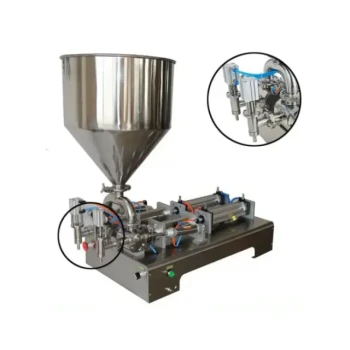
Pneumatic Double Nozzle Honey Filling Bottling Packaging Machine

Fully Automatic Honey Filling Packaging Machine for Processing Line
